Marijuana Licensing

Would you like free news, updates, and analysis regarding the Michigan Medical Marihuana Facility Licensing Act in Michigan? Marihuana Licensing is always changing and morphing. Get updated information on whats going on with the Michigan Cannabis Lawyers.

Cannabis Regulatory Agency Reminds Retail Licensees About Use of the Word “Dispensary”

Licensees are reminded that in 2019, the Michigan Department of Licensing and Regulatory Affairs issued a bulletin requiring licensed medical marijuana facilities to refer to themselves only as “provisioning centers,” and not as “dispensaries.” The bulletin was updated in 2022 and is available on the Department’s website.

The terminology restrictions apply to licensees under both the Medical Marihuana Facilities Licensing Act (MMFLA) and the Michigan Regulation and Taxation of Marihuana Act (MRTMA).

Under the Michigan Public Health Code (MCL 333.17711), the term “dispensary” is restricted to entities authorized under Pharmacy Practice and Drug Control laws.

Accordingly, Cannabis Regulatory Agency (CRA) licensed adult-use retailers and medical marijuana provisioning centers:

  • May not refer to themselves as a “dispensary”
  • May not use the term “dispensary” in advertising or marketing materials
  • May not use related terms such as:
    • Pharmacy
    • Apothecary
    • Drugstore
    • Druggist
    • Medicine store

Licensed medical marijuana facilities and licensed adult-use establishments are required to refer to and advertise themselves in compliance with applicable statutes and administrative rules.

All licensees are encouraged to review their signage, marketing materials, website content, and advertising to ensure full compliance.

Questions regarding terminology requirements may be directed to CRA-Info@michigan.gov.

Nearly $94 Million in Adult-Use Marijuana Payments for Fiscal Year 2025 to be Distributed to Michigan Municipalities, Counties, and Tribes

March 3, 2026 – Nearly $94 million will be distributed among 313 local government entities and tribes as part of the Michigan Regulation and Taxation of Marijuana Act.

A total of 114 cities, 39 villages, 81 townships, 75 counties, and four tribes will receive payments from the Marijuana Regulation Fund. For the State of Michigan’s 2025 fiscal year, this means each eligible municipality, county, and tribe will receive $54,017.10 for every licensed retail store and microbusiness located within its jurisdiction.

State law outlines how much is distributed to local entities, tribes, schools, roads and bridges:

  • 15% to municipalities and Indian tribes in which a licensed marijuana retail store or microbusiness is located
  • 15% to counties and Indian tribes in which a licensed marijuana retail store or microbusiness is located
  • 35% to the School Aid Fund to be used for K-12 education
  • 35% to the Michigan Transportation Fund to be used for the repair and maintenance of roads and bridges

Cannabis Regulatory Agency Files [Eye Watering!] Formal Complaint Against Ground Control Michigan, LLC dba GCM Waypoint

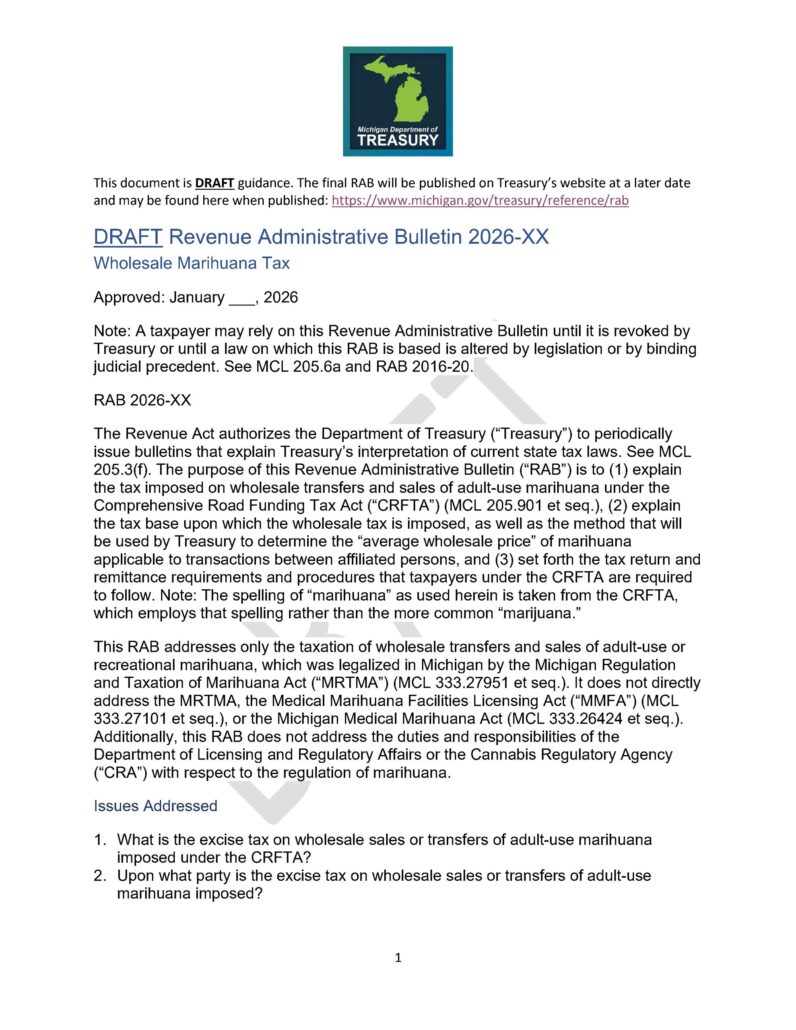
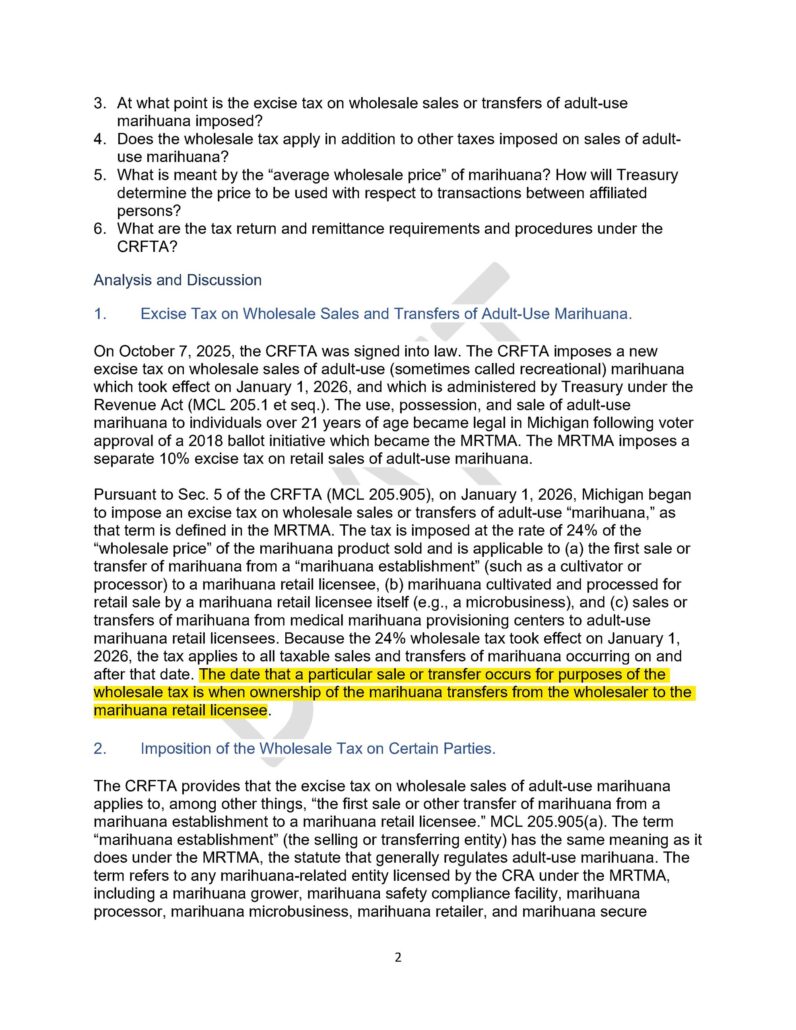
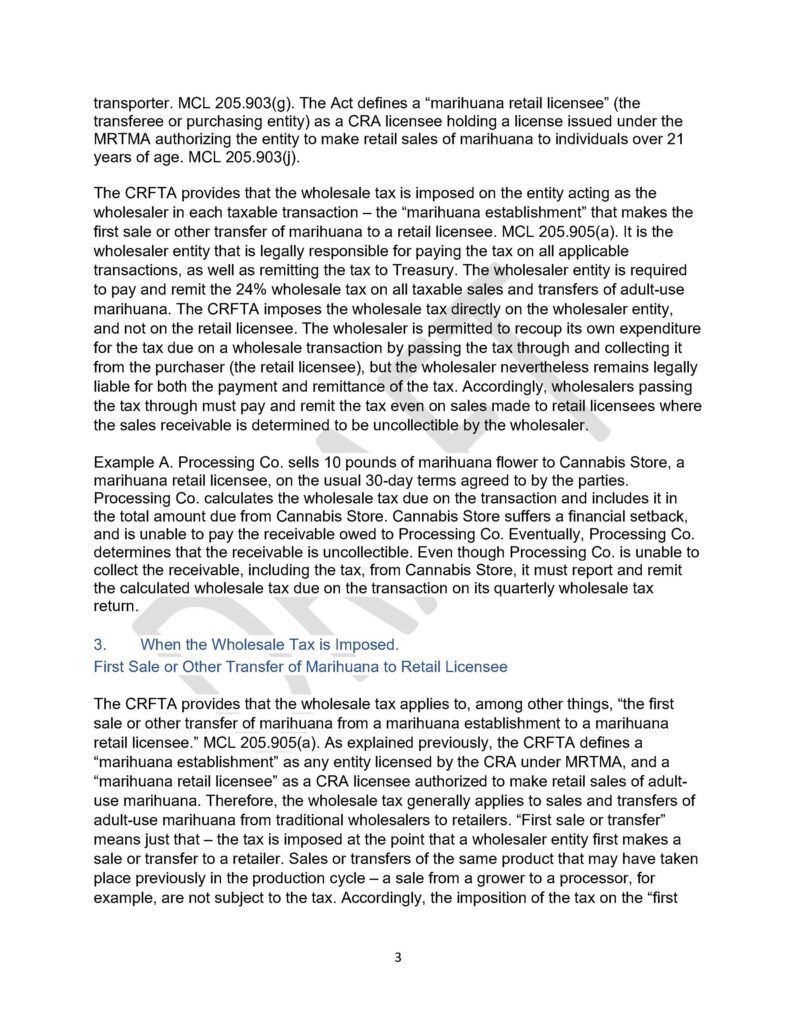
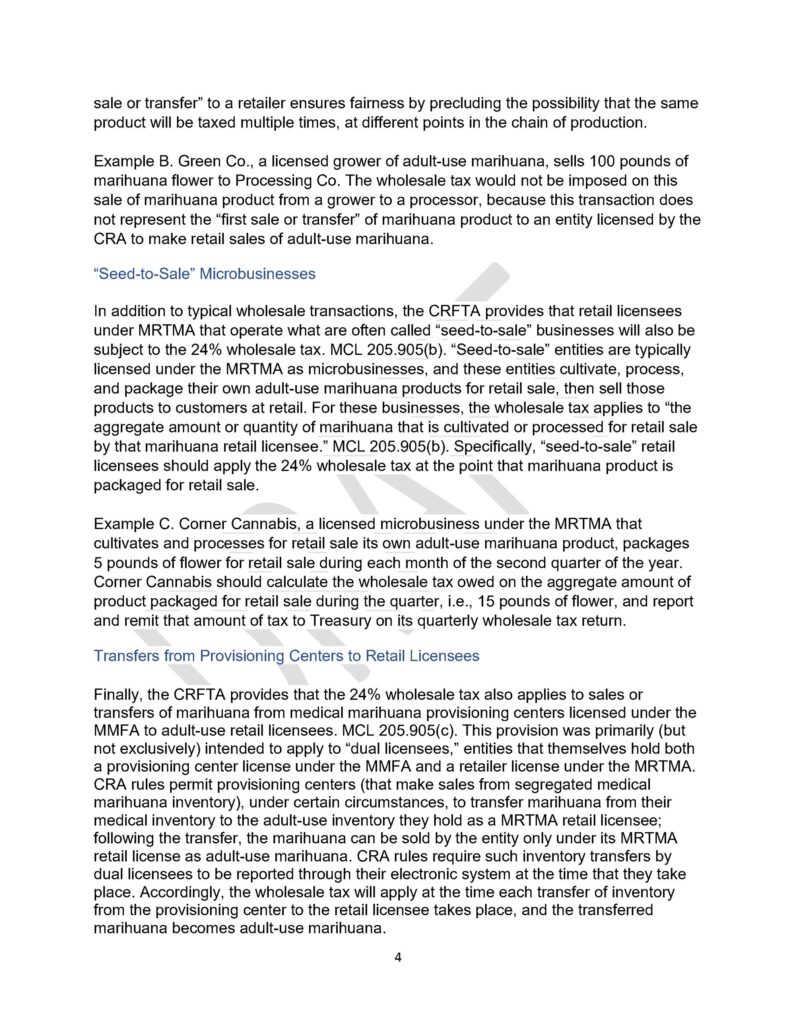
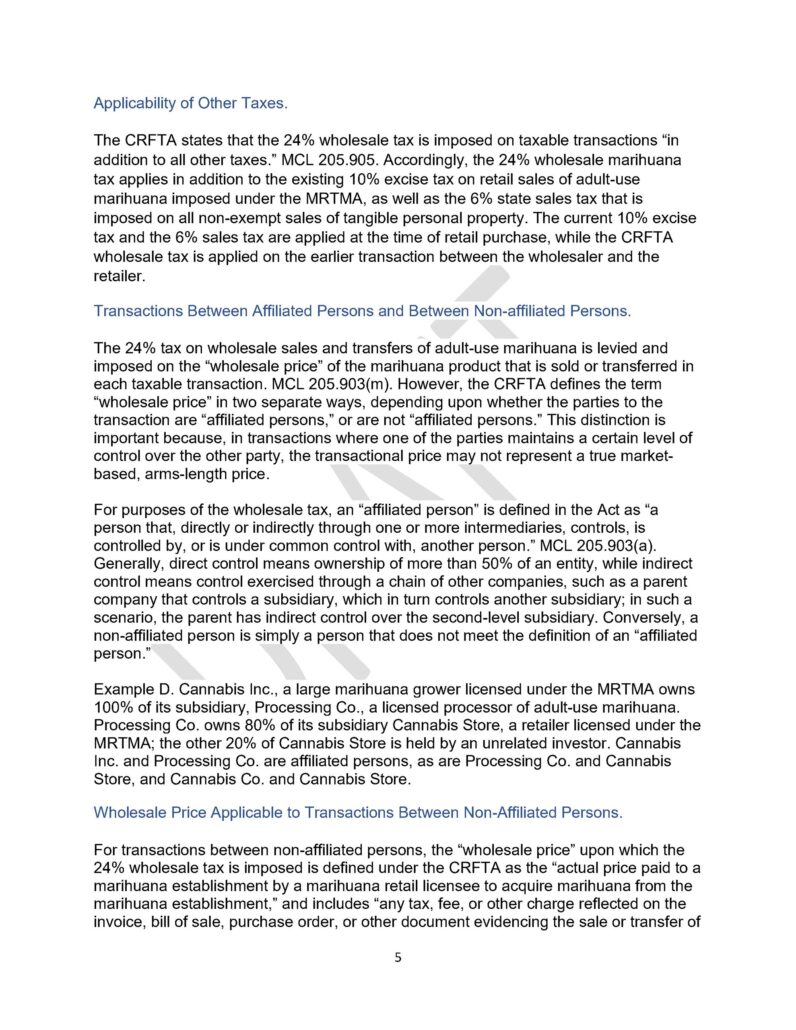
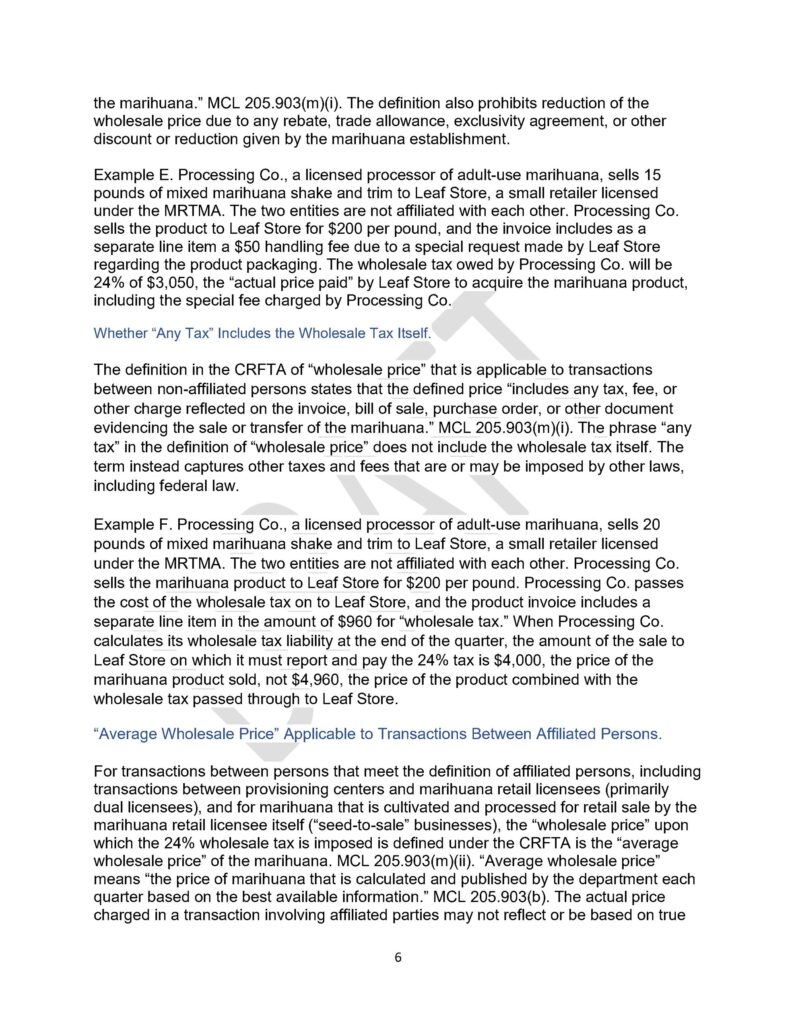
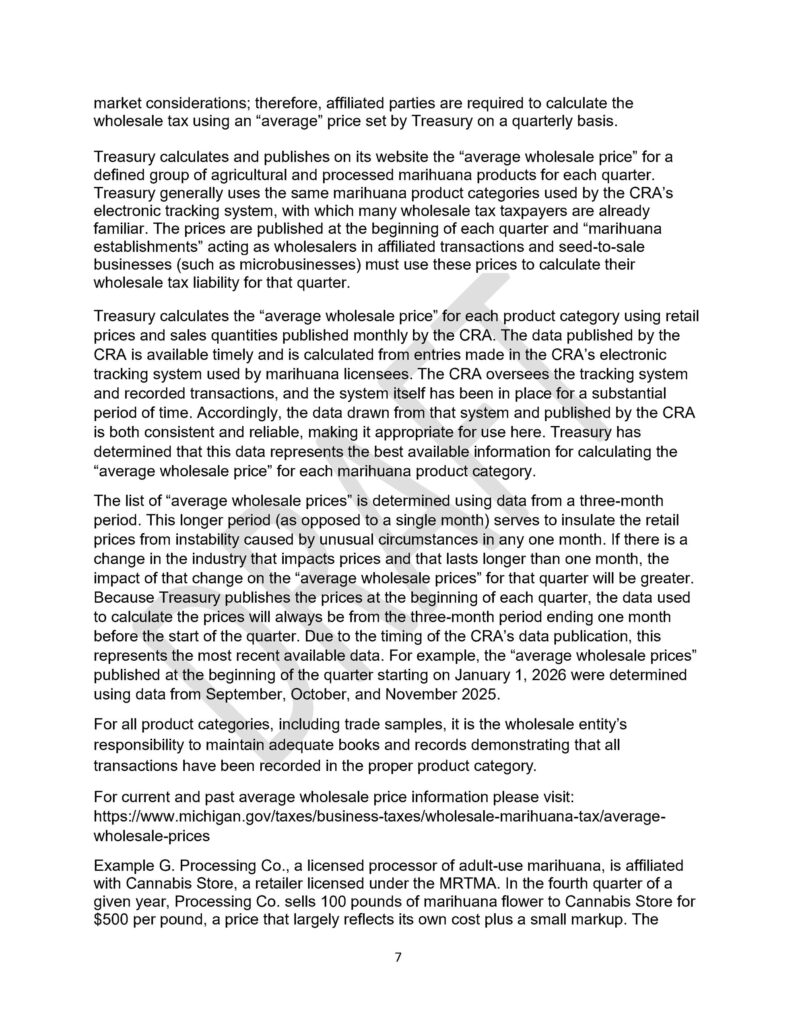
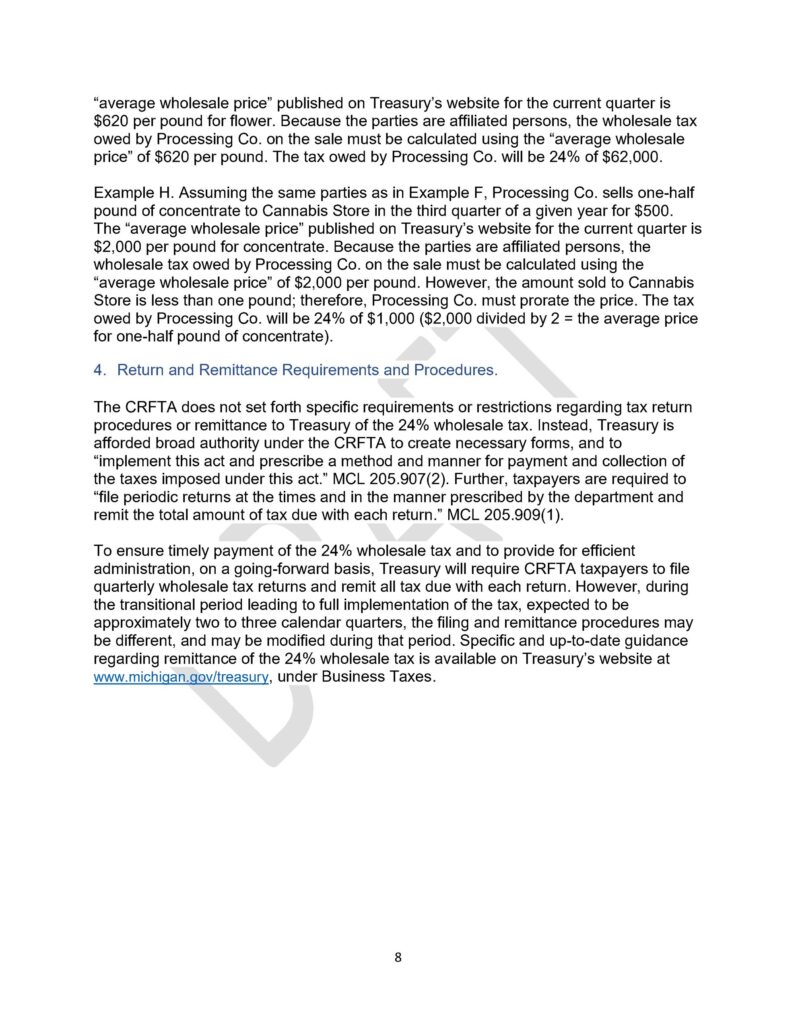
Michigan Treasury Publishes Draft Revenue Administrative Bulletin for 24% Wholesale Marihuana Tax – Public Comments Welcomed

Cherry Industries License Surrendered in Cannabis Regulatory Agency Resolution with Detroit Marijuana Grower

September 30, 2025 — The Cannabis Regulatory Agency (CRA) today announced a consent order and stipulation with Cherry Industries LLC (AU-G-C-000925), located at 6387 E. Nevada Street, Detroit, Michigan, resulting in the surrendering of their Class C Grower license.

On April 3, 2024, following an investigation, the CRA issued a formal complaint against the adult-use class C marijuana grower license (no. AU-G-C-000925) of Cherry Industries LLC for violating several provisions of the Michigan Regulation and Taxation of Marihuana Act (MRTMA) and its administrative rules.

During a routine inspection on November 15, 2023, CRA agents discovered Cherry Industries LLC had exceeded their legal plant limit. Additionally, numerous marijuana products, including immature and mature plants, buds, trim, and pre-rolls, were found untagged and not tracked in the state monitoring system. Further review revealed severe inventory tracking issues.

Cherry Industries LLC could not account for large discrepancies in both positive and negative package adjustments, amounting to thousands of pounds of marijuana product and thousands of units. Over 4,200 pounds of product recorded in the statewide monitoring system did not exist physically, and more than 41,000 pounds of wet weight from 115 harvests remained incomplete in the system. It was also found that Cherry Industries LLC had improperly mixed products from different harvests, transferred marijuana that had failed safety testing due to contamination with a banned pesticide, and sold contaminated pre-rolls to consumers.

Additional violations included improper batch sampling practices, failure to provide full access to batches for lab testing, and substantial noncompliance with video surveillance requirements. Although the CRA granted an extension for submitting surveillance footage, the Respondent ultimately provided incomplete and insufficient footage, including missing days, limited camera coverage, and hours-long gaps.

These findings collectively demonstrate significant failures in regulatory compliance, product tracking, safety standards, and operational transparency.

As part of the consent order and stipulation, Cherry Industries LLC license has agreed to permanently voluntarily surrender the license (effective ten days after the effective date of the order) and has agreed that it shall not be renewed, reinstated, reissued, or reactivated, limited or otherwise, at any future date.

CRA announces transition from paper licenses to digital format

Effective October 1, 2025, the Cannabis Regulatory Agency (CRA) will transition its Licensed Wall Certifications to a digital format. Once a license is issued, licensees will be able to log into their Accela Portal to access and print their digital wall certification for display. This change provides immediate access to wall certifications, allowing licensees to print or reprint their license at any time during the licensing period, and eliminates potential delays caused by USPS mailing issues. For more information and instructions, please visit https://www.michigan.gov/cra/digital-wall-certificate. Any active licenses will not need to be replaced but will change to the new format upon renewal. 

CRA Announces Historic Cannabis Compact Signed Between State of Michigan and Bay Mills Indian Community

August 1, 2025 — In a historic development for cannabis policy and tribal sovereignty in Michigan, the Cannabis Regulatory Agency (CRA) and the Bay Mills Indian Community (BMIC) have officially signed the state’s first tribal-state cannabis compact, allowing the Upper Peninsula-based tribal nation to participate directly in Michigan’s licensed adult-use cannabis market.

The agreement, finalized on July 25, 2025, allows Bay Mills to integrate its Northern Light Cannabis Company into Michigan’s statewide Metrc tracking system and access the same wholesale and distribution channels as other licensed operators. The compact marks a major shift in how tribal and state governments can collaborate in emerging, regulated markets.

“This agreement reflects our shared commitment to safe, equitable, and well-regulated cannabis commerce,” said Brian Hanna, Executive Director of the Cannabis Regulatory Agency. “Welcoming BMIC into the regulated framework sets a model for tribal-state cooperation nationwide.”

“This compact represents a historic affirmation of tribal sovereignty and our inherent right to govern economic development on our own terms,” said BMIC President Whitney Gravelle. “We are proud to lead the way in establishing a framework for Tribal-State cooperation in the cannabis industry, one that respects self-determination, promotes equity, and opens the door for future partnerships grounded in mutual respect.”

BMIC was the first Michigan tribal nation to legalize adult-use cannabis on tribal lands in 2019 and launched its own tribally owned cannabis brand, Northern Light, in 2021. The company grows and produces organically cultivated cannabis at a vertically integrated facility in Chippewa County. Until now, its operations were limited to BMIC’s sovereign lands and the limited retail reach permitted by tribal law.

With this compact, BMIC will now be able to:

  • Sell products, including flower, concentrates, and edibles, across the state through licensed distributors and retailers
  • Participate in CRA-led compliance, testing, and inspection protocols
  • Integrate into Michigan’s statewide monitoring system for full seed-to-sale tracking and consumer transparency
  • Operate with the same privileges and responsibilities as other adult-use licensees statewide

The agreement creates a new category of participation in the cannabis industry for sovereign tribal governments in Michigan – one that respects tribal jurisdiction while aligning with statewide regulatory oversight. Importantly, the agreement allows the CRA to conduct inspections and audits, as well as monitor product safety and consumer protections, even on tribal lands, through mutual cooperation.

The tribal excise tax, along with statutorily required distributions from the Marihuana Regulation Fund, are expected to provide significant support to BMIC and its members as revenues will fund tribal infrastructure, education, public health programs, and economic development projects throughout the region.

Currently, 12 federally recognized tribes reside in Michigan, many of which have expressed interest in pursuing similar compacts. State officials and tribal representatives have both acknowledged that clear, legally binding agreements like this one are necessary to avoid jurisdictional confusion, foster consumer trust, and maintain a level playing field in a highly competitive and heavily scrutinized industry.

For answers to frequently asked questions about this agreement, click here.

About the Cannabis Regulatory Agency

The CRA oversees the regulation of cannabis in Michigan, including the state’s adult-use and medical marijuana systems. The CRA is responsible for licensing, compliance, testing, and enforcement. It ensures that cannabis operations meet the highest standards of public health, safety, and fairness.

About Bay Mills Indian Community

The Bay Mills Indian Community, located in Michigan’s eastern Upper Peninsula, is a federally recognized tribal nation and a long-standing leader in tribal economic development. In addition to cannabis, the tribe operates gaming, hospitality, and education enterprises and has a strong record of environmental stewardship and cultural preservation.